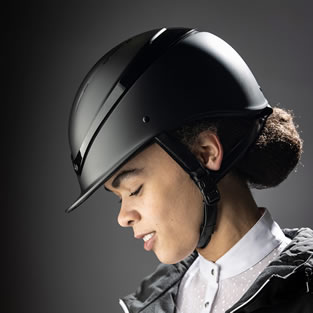
Safety Testing

The amount of times a batch of riding helmets is tested varies between the different certifications. The BSI Kitemark checks one of every 200 helmets from a batch of 800 to 3,200 before they will issue an approval label. If the helmets don’t pass the standard then the whole batch must be destroyed. SEI (Safety Equipment Institute, based outside Washington, DC) will test a batch every 12 months to ensure quality. All of the certification schemes require the helmets to pass an initial design test. The CE mark (the European safety certification scheme) does not require any further testing after initial approval unless the helmet is modified from its original design.

When helmets are tested, they are traditionally checked by measuring the peak acceleration of a helmeted steel head form falling onto a steel surface. For leading manufacturers, this is only the start of analyzing how a helmet will perform in the real world. At Charles Owen’s design headquarters in the UK, advanced computer simulation is used to understand how to maximize the dissipation of energy from an impact by using complex combinations of materials.